
From Kitchen to Customer: How Real-Time Temperature & Custody Tracking Strengthens Catering Food Safety
Meta Description:
Learn how real-time temperature and custody tracking can help caterers protect food quality, improve delivery visibility, strengthen accountability, and build customer trust.
Food safety does not end when a catering order leaves the kitchen. For commercial caterers, the delivery journey is one of the most important stages in protecting food quality and maintaining customer confidence. Once prepared meals leave the controlled environment of the kitchen, temperature, handling, transportation time, and handoffs can all affect the final outcome.
For caterers managing corporate lunches, large events, healthcare facilities, schools, or multi-location deliveries, relying on manual checklists and verbal updates can make it difficult to know exactly what happened to an order between preparation and arrival. This is where real-time temperature and custody tracking can provide greater operational visibility.
Food Safety Is a Journey, Not a Single Check
A temperature check before an order leaves the kitchen provides useful information, but it only captures one moment.
Food may spend significant time being loaded, transported, unloaded, and handed to a customer or event coordinator. Without visibility throughout that journey, catering managers may not know whether the required conditions were maintained.
Real-time monitoring can help create a more complete picture of the delivery process. Instead of asking whether an order was safe when it left the kitchen, operators can have better insight into what happened throughout its journey.
Why Temperature Visibility Matters
Temperature-sensitive foods require careful handling. A delay in transportation, an improperly managed vehicle, or an unexpected stop can create operational and food-safety concerns.
Digital temperature monitoring can provide alerts when conditions move outside established operational thresholds. This allows teams to identify potential issues earlier instead of discovering them only after delivery.
For catering businesses, this visibility can also support better decision-making. Managers can investigate exceptions, review delivery conditions, and improve procedures for future orders.
Track Custody Across Every Handoff
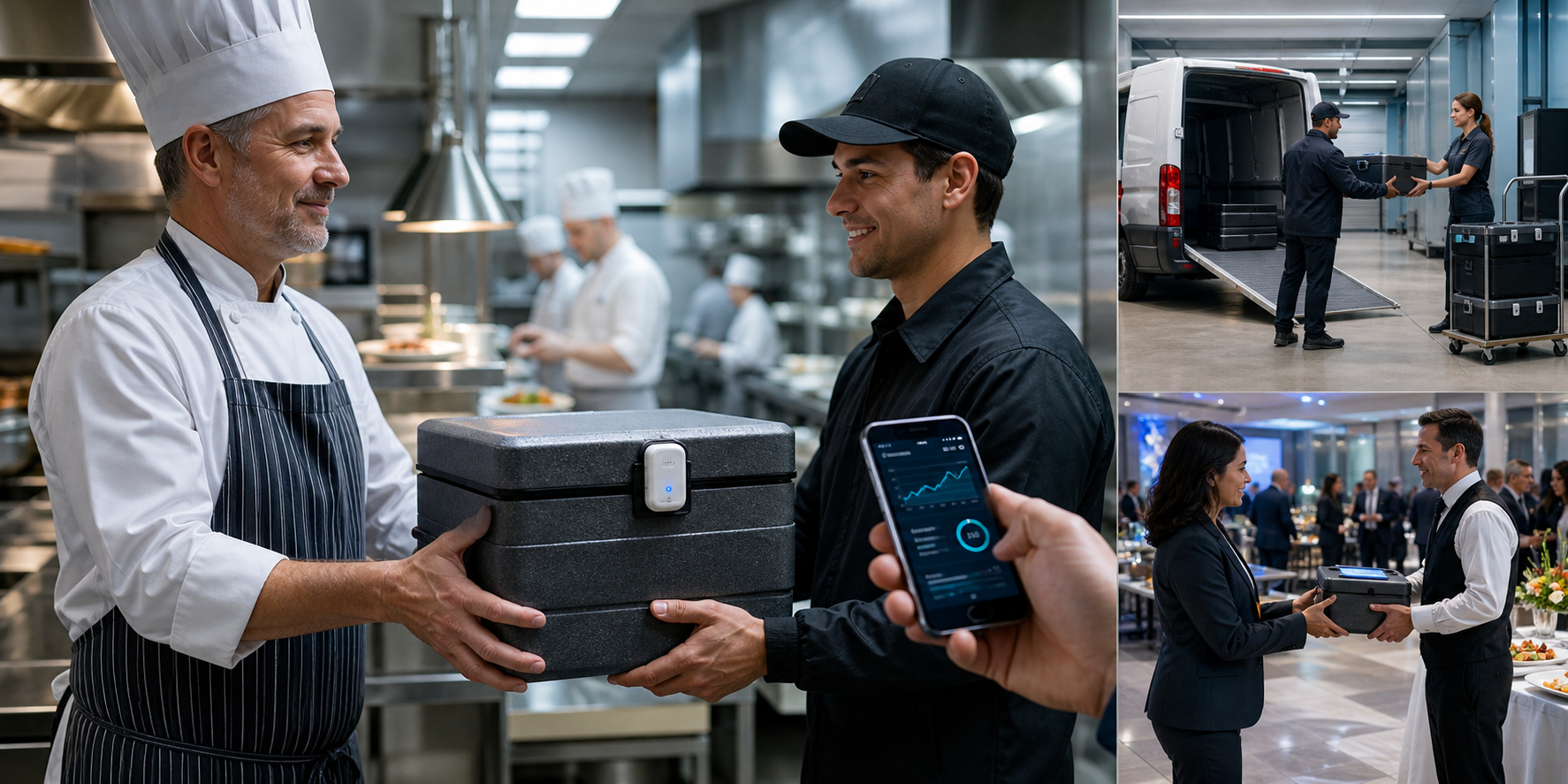
Temperature is only one part of delivery accountability. Another important element is chain of custody—knowing who was responsible for an order at each stage of its journey.
An order may move from a kitchen employee to a packing team, then to a driver, and finally to an event coordinator or customer.
A digital record of these handoffs can make responsibilities clearer and reduce uncertainty when something goes wrong.
Instead of relying on scattered messages or paper forms, catering teams can maintain a more structured record of order movement and delivery activity.
Turn Delivery Data Into Operational Intelligence
Real-time tracking is most valuable when the information can be used to improve operations.
If a catering company repeatedly experiences delays on a particular route, during a particular delivery window, or with a specific type of order, historical data can reveal the pattern.
Managers can then adjust preparation schedules, dispatch timing, transportation planning, or staffing.
This transforms food-safety monitoring from a compliance activity into a source of operational intelligence.
How CaterAIx Can Support a More Connected Workflow
Modern catering businesses need more than disconnected tools for orders, communication, delivery, and customer management. They need visibility across the entire catering ecosystem.
CaterAIx supports a connected approach to catering operations, helping businesses organize customer, order, vendor, caterer, and delivery-related information within a broader digital workflow.
When operational data becomes easier to access and coordinate, catering teams can respond faster, improve accountability, and create a more consistent customer experience.
Building Trust Beyond the Kitchen
Customers expect more than great food. They expect reliability, professionalism, and confidence that their orders are being handled properly from preparation through delivery.
Real-time temperature and custody tracking can help caterers provide that confidence while giving managers better control over increasingly complex delivery operations.
For growing commercial caterers, the future of food safety is not simply more paperwork. It is better visibility, stronger traceability, and smarter digital coordination from kitchen to customer.
With a connected platform such as CaterAIx, caterers can move toward a more transparent and intelligent delivery workflow—helping protect food quality while building the operational foundation needed to scale.