
Catering Management Software vs. Intelligent Marketplaces: Which Is Right for Your Kitchen?
Meta Description: Compare catering management software and intelligent marketplaces to discover which solution best streamlines kitchen operations, attracts customers, and grows your catering business.
Introduction
The catering industry is evolving rapidly, and technology plays an essential role in helping businesses manage operations, attract customers, and increase profitability. Whether you operate a small catering company, a restaurant with catering services, or a large commercial kitchen, choosing the right digital solution can make a significant difference. Two popular options are catering management software and intelligent marketplaces. Although both support business growth, they serve different purposes.
Understanding their features, benefits, and limitations can help you determine which solution best fits your kitchen’s needs.
What Is Catering Management Software?
Catering management software is a digital tool designed to simplify and organize daily catering operations. It helps businesses manage orders, schedules, menus, customer information, invoices, staff assignments, and event planning from one central platform.
One of its biggest advantages is operational efficiency. Instead of relying on spreadsheets, paper records, or multiple applications, kitchen managers can track orders, monitor expenses, and coordinate employees in one place.
Many platforms also offer inventory management, automated billing, reporting, and customer relationship management features. These capabilities help reduce administrative errors, control food costs, and improve service consistency.
Catering management software is particularly useful for established businesses handling multiple events, complex menus, recurring clients, or large order volumes. However, subscription fees, staff training, and initial setup requirements should be considered before investing in a platform.
What Are Intelligent Marketplaces?
Intelligent marketplaces are digital platforms that connect catering providers with potential customers. Using technologies such as data analytics, recommendation systems, and automated matching, these platforms help customers discover catering services that suit their budgets, preferences, locations, and event requirements.
For catering businesses, intelligent marketplaces can provide access to new customers without requiring extensive independent marketing efforts. Providers can showcase their menus, receive inquiries, compare opportunities, and build their reputations through customer reviews.
These platforms can be particularly valuable for new catering companies looking to increase visibility and generate leads. Established kitchens can also use them to reach new customer segments and secure additional bookings.
However, marketplaces may charge commissions or listing fees, and competition can be intense. Businesses may also have limited control over customer relationships, platform rules, and how their services appear in search results.
Key Differences Between the Two Solutions
The primary difference lies in their purpose. Catering management software focuses on running your kitchen and organizing business operations, while intelligent marketplaces focus on connecting your services with potential buyers.
If your biggest challenges involve order coordination, inventory tracking, scheduling, and financial reporting, catering management software may be the better choice. If you need more exposure, customer inquiries, and new booking opportunities, an intelligent marketplace could provide greater value.
Before choosing either solution, consider your budget, business size, current workload, customer acquisition strategy, and long-term goals. Evaluate pricing structures, integration options, customer support, and data ownership to ensure the platform meets your requirements.
Can Your Kitchen Benefit From Both?
Absolutely. Catering management software and intelligent marketplaces can complement each other rather than compete. A marketplace can help generate leads and bookings, while management software can organize those orders and support efficient fulfillment.
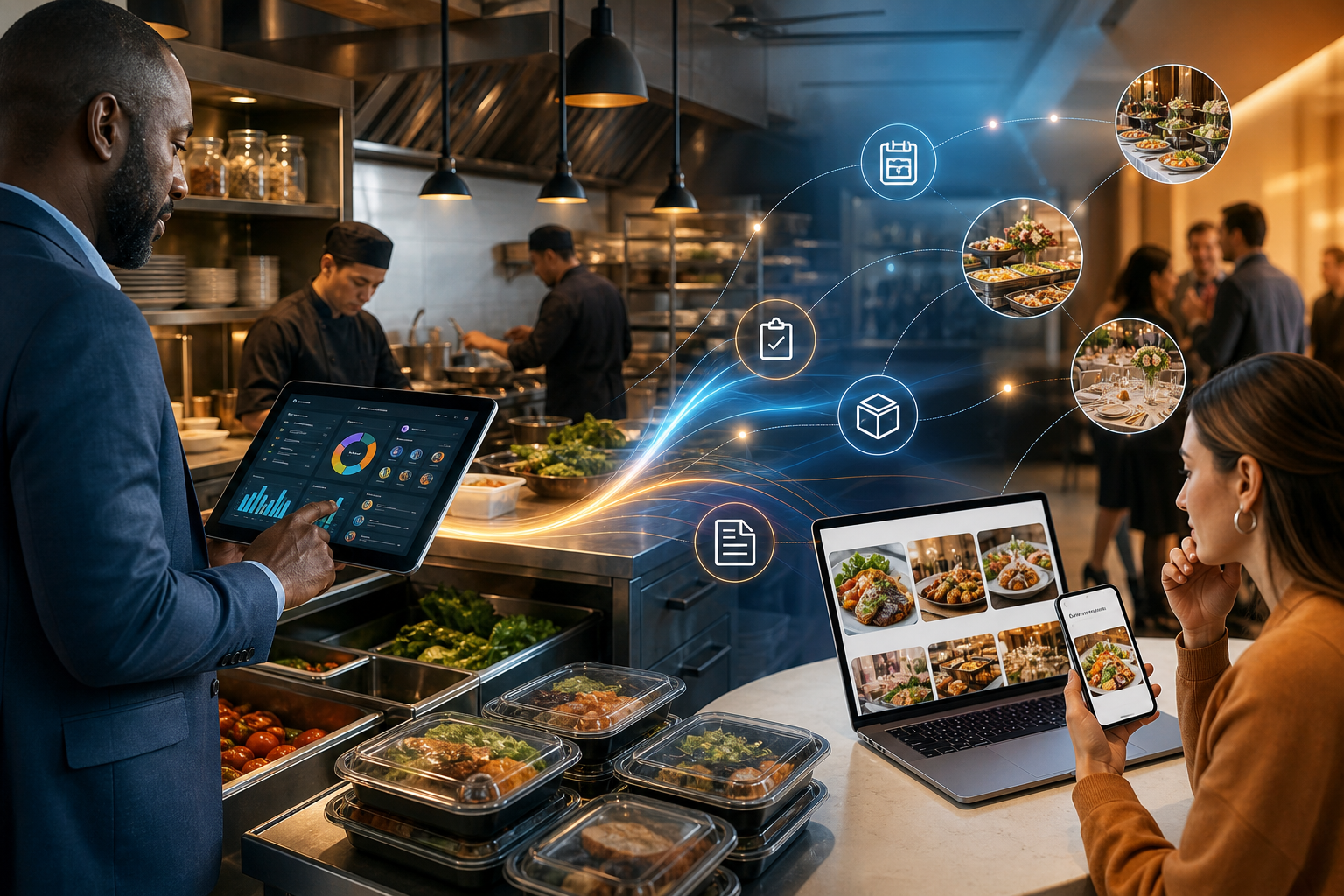
For example, a catering company might use an intelligent marketplace to attract corporate lunch orders. Once customers book, the business can use its management software to schedule food preparation, calculate ingredient requirements, assign staff, track expenses, and generate invoices.
This combined approach can help catering businesses improve operational control while expanding their customer base. However, it is important to check whether the selected platforms integrate with each other or require manual data entry.
How to Choose the Right Solution for Your Kitchen
Start by identifying your biggest business challenge. If your team struggles with managing orders, tracking inventory, coordinating events, or preparing invoices, prioritize catering management software.
If your kitchen has the capacity to serve more customers but struggles to attract bookings, consider an intelligent marketplace that reaches your target audience.
Next, compare costs against expected benefits. Look beyond the advertised subscription price and account for transaction fees, commissions, setup expenses, and staff training. Test available demonstrations or trial versions when possible, and choose a solution that can grow with your business.
Conclusion
Choosing between catering management software and intelligent marketplaces depends on your kitchen’s most pressing needs. Management software helps streamline operations, while intelligent marketplaces support customer discovery and business growth.
For kitchens focused on efficiency, invest in tools that simplify daily operations. For businesses seeking more customers, explore marketplaces that offer relevant leads and transparent pricing. If your budget allows, combining both solutions may provide the strongest foundation for sustainable growth in today’s competitive catering industry.