
How AI Dynamic Pricing Is Transforming Bay Area Catering Profitability
How AI Dynamic Pricing Is Transforming Catering Profitability in the Bay Area
Catering in the Bay Area is a high-opportunity business—but it is also one of the most challenging markets to manage profitably. Rising labor costs, seasonal demand, traffic delays, ingredient price fluctuations, and intense competition can quickly turn a successful event into a low-margin project.
AI dynamic pricing is helping catering companies respond to these challenges with greater accuracy. By analyzing real-time data and adjusting prices based on demand, costs, and operational complexity, caterers can protect margins while offering customers more relevant and competitive quotes.
What Is AI Dynamic Pricing?
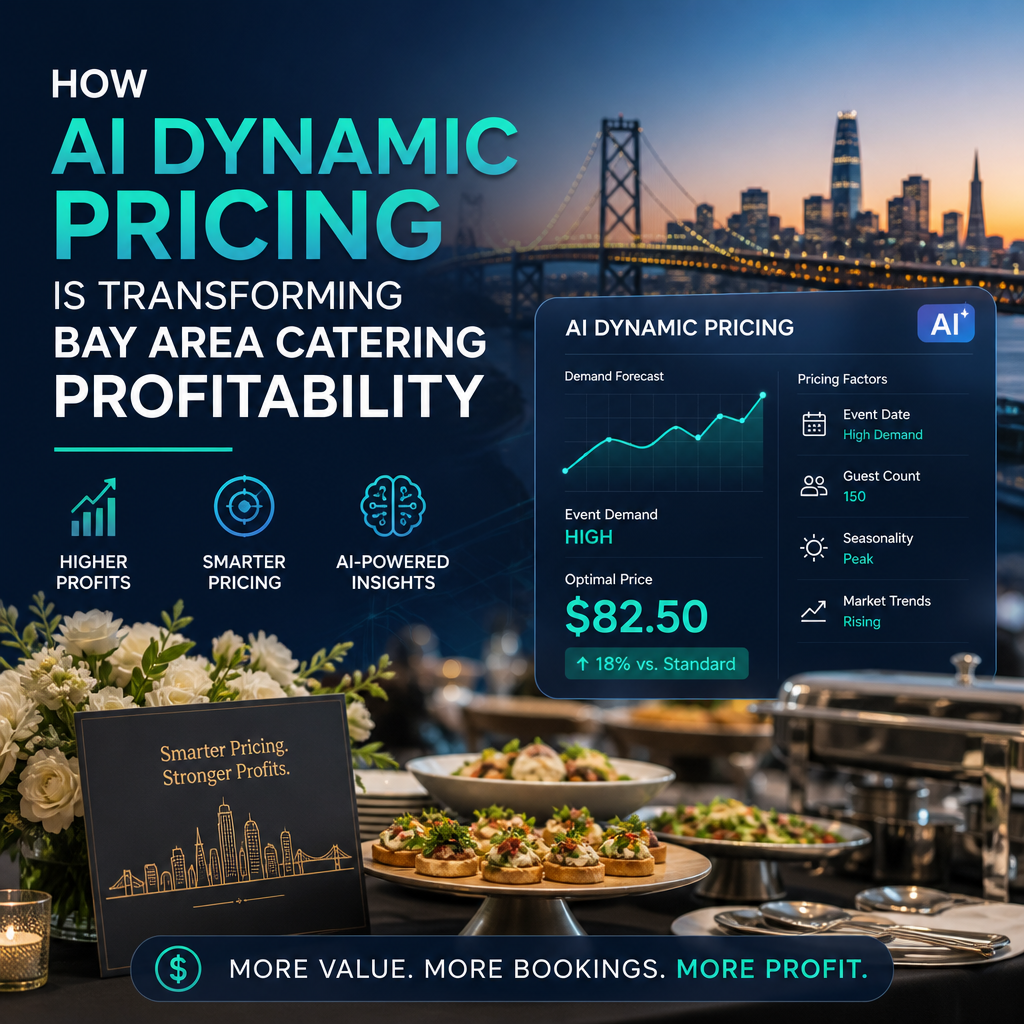
AI dynamic pricing uses machine learning and business data to recommend or automatically adjust prices. Instead of relying only on fixed menus or traditional markups, the system evaluates factors such as:
- Event date and time
- Guest count
- Location and travel distance
- Menu selection and ingredient costs
- Staffing requirements
- Equipment and rental needs
- Seasonal demand
- Booking lead time
- Historical sales and profitability
For example, a corporate lunch in downtown San Francisco may require different pricing from a weekend wedding in Marin County. The guest count could be similar, but travel time, staffing, parking, service expectations, and demand patterns may vary significantly.
AI helps identify these differences quickly and consistently.
Improving Profit Margins With More Accurate Quotes
One of the biggest advantages of AI dynamic pricing is improved quote accuracy. Catering companies often lose money because estimates fail to account for hidden costs, including overtime, fuel, delivery delays, last-minute changes, or unusually complex preparation.
An AI-powered pricing model can compare a new inquiry with historical events that had similar characteristics. It can then estimate expected labor hours, food usage, delivery requirements, and potential operational risks.
This allows businesses to:
- Calculate more realistic costs.
- Apply appropriate profit margins.
- Reduce underpriced proposals.
- Identify services that require additional fees.
- Respond to inquiries faster.
More accurate pricing does not necessarily mean charging more. It means ensuring that every quote reflects the true cost of delivering a high-quality experience.
Responding to Bay Area Demand Patterns
The Bay Area has a diverse catering calendar. Technology conferences, nonprofit fundraisers, private celebrations, weddings, holiday parties, and office events can create sharp shifts in demand.
AI dynamic pricing helps companies recognize these patterns before they become obvious. If booking data shows that Friday evenings in September are consistently in high demand, pricing can reflect limited availability. Conversely, discounts or value-focused packages may help fill slower dates.
This approach creates more flexibility than a static price list. Caterers can offer:
- Early-booking incentives during slower periods
- Premium pricing for peak dates
- Minimum order requirements for difficult time slots
- Special packages for weekday corporate events
- Delivery adjustments based on distance and traffic conditions
By matching prices to market conditions, caterers can improve capacity utilization and reduce revenue lost to unfilled schedules.
Creating Better Customer Experiences
Dynamic pricing is not only about maximizing revenue. When implemented transparently, it can also improve the customer experience.
Customers receive quotes that are more closely aligned with their event requirements. Instead of forcing every client into the same package structure, caterers can provide personalized options based on budget, service level, menu preferences, and location.
AI can also help sales teams identify suitable upgrades, such as staffing support, upgraded rentals, beverage service, or premium menu items. These recommendations can feel more useful than generic upselling because they are based on the event’s actual needs.
Clear communication remains essential. Catering businesses should explain what influences pricing and present options in a straightforward way. Transparency builds trust, particularly when prices change according to date, demand, or service complexity.
Supporting Smarter Operations
Pricing decisions affect more than sales. They also influence staffing, purchasing, scheduling, and kitchen capacity.
When AI identifies a high-demand period, managers can plan labor and inventory earlier. They may also choose to limit bookings that would create scheduling conflicts or strain production capacity.
Over time, the data can reveal important business insights, such as:
- Which menus produce the strongest margins
- Which event types generate repeat business
- Where delivery costs are highest
- Which services frequently require extra labor
- When customers are most sensitive to price changes
These insights help owners make strategic decisions instead of relying solely on instinct.
The Future of Catering Profitability
AI dynamic pricing is becoming an important competitive tool for Bay Area caterers. Businesses that use it effectively can quote faster, manage risk more accurately, and protect profitability in a market with constantly changing costs.
The most successful approach combines technology with human judgment. AI can identify patterns and recommend prices, but experienced catering professionals still provide the creativity, hospitality, and personal attention that clients value.
As the Bay Area catering industry continues to evolve, dynamic pricing will help companies operate more efficiently while delivering customized experiences. For caterers, the result is a stronger business model built on better data, smarter decisions, and healthier margins.