
CaterAIx vs. Traditional Catering Software: Why AI Wins in 2026
CaterAIx vs. Traditional Catering Software: Why AI-Driven Event Management Wins in 2026
Catering has always required careful planning, fast communication, and flawless execution. In 2026, however, event expectations are higher than ever. Clients want personalized experiences, accurate quotes, rapid responses, and seamless coordination across every stage of an event.
Traditional catering software can handle basic tasks such as invoicing, menus, and scheduling. But as events become more complex, many catering businesses need more than digital record-keeping. They need intelligent tools that can anticipate problems, automate decisions, and help teams work more efficiently.
That is where CaterAIx stands apart.
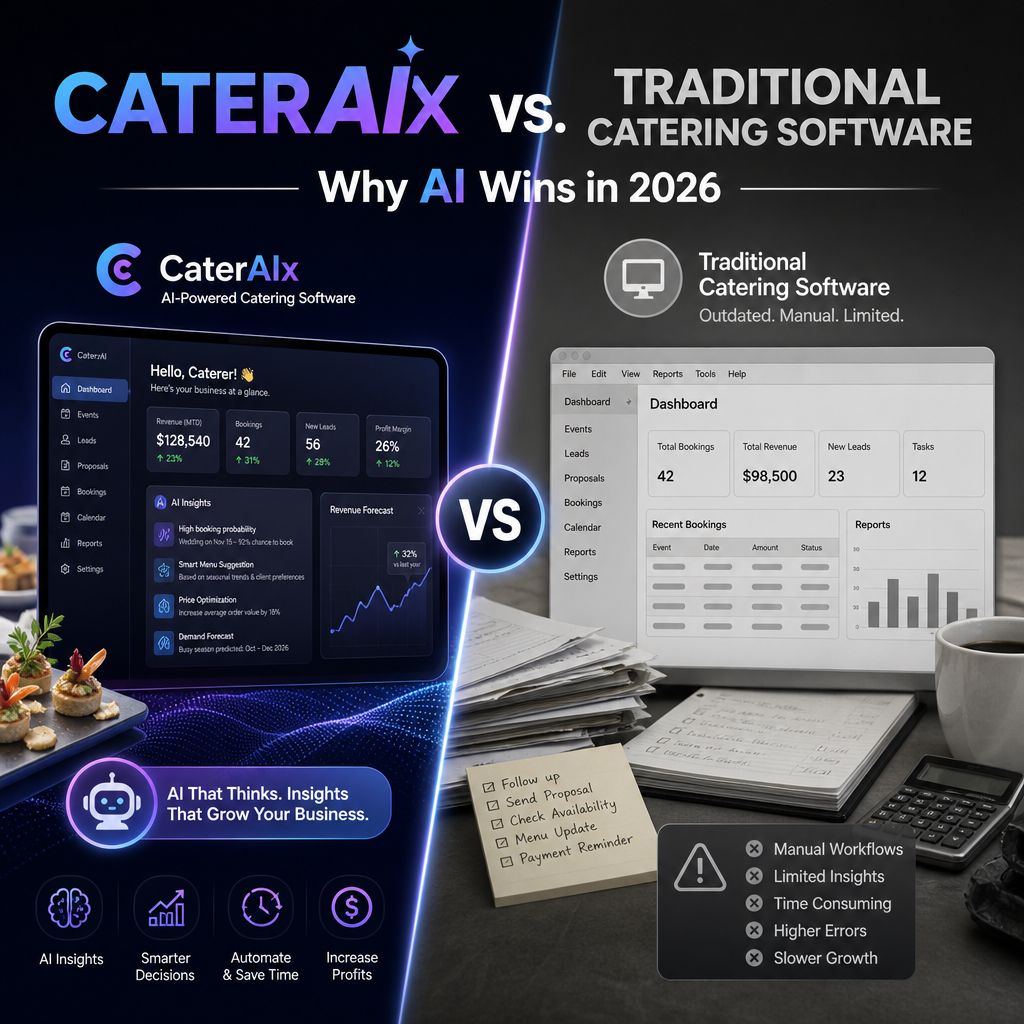
The Limits of Traditional Catering Software
Traditional catering platforms are often built around static workflows. Users enter information, select options, and manually move projects from one stage to the next. While this can improve organization, it still leaves much of the decision-making to staff.
Common limitations include:
- Manual creation of proposals and quotes
- Repetitive data entry
- Limited communication between departments
- Inaccurate forecasting of food, staffing, or equipment needs
- Difficulty adapting to last-minute changes
- Reports that describe past performance but do not guide future decisions
These systems may work well for straightforward events. However, weddings, corporate conferences, festivals, and multi-location functions often involve changing guest counts, complex menus, vendor coordination, dietary requirements, and strict timelines.
When information is scattered across spreadsheets, emails, and separate software modules, mistakes become more likely.
How CaterAIx Uses AI to Improve Event Management
CaterAIx is designed to support the entire catering operation with AI-driven automation and insights. Instead of simply storing information, it can help teams interpret data and act on it.
Faster Quotes and Proposals
Preparing a catering proposal often takes significant time. Staff may need to review menus, calculate portions, factor in labor, estimate rentals, and adjust pricing based on the client’s requirements.
An AI-powered system can streamline this process by analyzing event details and generating accurate starting points for quotes and proposals. Teams can respond faster while maintaining consistency across pricing, packages, and service options.
Faster response times can also improve conversion rates. Clients are more likely to choose a caterer that communicates clearly and professionally from the beginning.
Smarter Resource Planning
One of the biggest challenges in catering is estimating what an event will require. Ordering too much creates waste, while ordering too little can damage the guest experience.
CaterAIx can use historical data, guest numbers, menu selections, event type, and service style to support more precise planning. This helps caterers make better decisions about:
- Ingredient quantities
- Staffing levels
- Equipment and rental needs
- Preparation schedules
- Delivery requirements
The result is greater efficiency without sacrificing quality.
Better Handling of Last-Minute Changes
Event details rarely remain fixed. Guest counts change, venues adjust schedules, and clients add dietary or service requests close to the event date.
Traditional systems may require staff to update several records manually. AI-driven event management can help identify which schedules, orders, invoices, and task assignments are affected by a change. This reduces the risk of inconsistent information and overlooked updates.
Personalization Without More Administrative Work
Modern clients expect menus and experiences tailored to their preferences. They may request regional cuisine, wellness-focused options, sustainable ingredients, allergy-friendly menus, or themed food stations.
CaterAIx can help teams organize these preferences and use them to inform menu recommendations, proposals, and event plans. Personalization becomes easier to deliver because the system helps staff manage complexity behind the scenes.
This is especially valuable for catering companies serving multiple events at once. A smarter platform allows teams to provide a customized client experience without multiplying administrative work.
Data-Driven Decisions for Catering Businesses
Traditional software often produces reports after an event, such as revenue totals or labor costs. These reports are useful, but they are primarily historical.
AI-driven platforms can make business data more actionable. CaterAIx can help identify patterns such as:
- Which menu items generate the strongest margins
- Which event types require the most labor
- When demand is likely to increase
- Which clients or packages are most profitable
- Where waste or scheduling inefficiencies are occurring
These insights help owners and managers make informed decisions about pricing, staffing, inventory, and marketing.
Why AI-Driven Event Management Wins in 2026
The advantage of CaterAIx is not simply that it uses artificial intelligence. Its value comes from applying AI to practical catering challenges.
In 2026, successful catering companies will need to be responsive, efficient, and adaptable. Customers will expect quick communication, accurate planning, and personalized service. At the same time, businesses will face rising labor costs, tighter margins, sustainability pressures, and increasing competition.
Traditional catering software can provide structure. CaterAIx adds intelligence, helping teams move from reacting to problems toward anticipating them.
The Future of Catering Technology
Catering software is evolving from a digital filing cabinet into an operational partner. AI-driven tools can reduce repetitive work, improve accuracy, and give catering professionals more time to focus on hospitality and creativity.
For businesses seeking a competitive advantage in 2026, the question is no longer whether technology should be part of event management. The more important question is whether that technology can learn, adapt, and support better decisions.
With its focus on automation, personalization, forecasting, and connected workflows, CaterAIx represents the next step in modern catering management.