

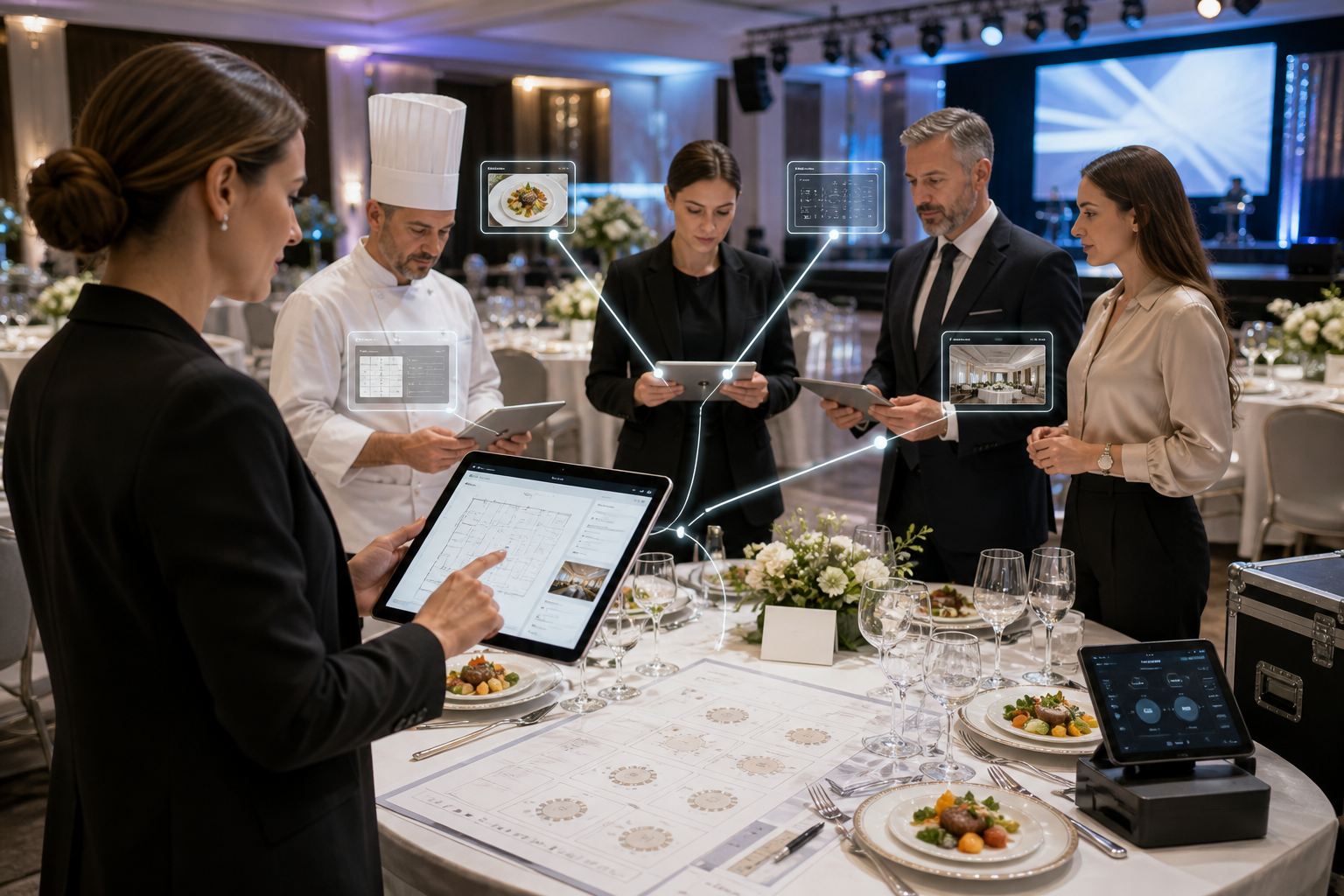
How Digital BEO Contracts Prevent Costly Miscommunications in Event Planning
Meta Description: Discover how digital BEO contracts help event planners prevent costly miscommunications, streamline catering operations, improve team coordination, and deliver successful events.
Introduction
Successful event planning depends on clear communication, accurate documentation, and seamless coordination between event planners, catering teams, venues, and clients. Even a small misunderstanding about guest counts, menu selections, event schedules, or payment terms can lead to unexpected expenses and dissatisfied customers.
A Banquet Event Order (BEO) is an essential document that outlines the key details of an event, including catering requirements, room arrangements, timelines, staffing, equipment, and special requests. Traditionally, BEOs have been managed through printed documents, spreadsheets, and email exchanges. However, digital BEO contracts are transforming this process by making event information easier to update, share, and track.
For modern hospitality providers, digital BEO solutions offer a practical way to minimize errors, improve communication, and protect profitability.
What Are Digital BEO Contracts?
Digital BEO contracts are electronic documents or workflow-based systems used to record and manage event requirements. They centralize important details such as event dates, guest numbers, food and beverage selections, setup instructions, pricing, payment terms, and client approvals.
Unlike static paper documents, digital BEO systems can support real-time updates, electronic signatures, automated notifications, and centralized access for authorized team members.
This allows event planners, kitchen managers, service staff, and clients to work from a consistent source of information. When implemented properly, digital BEO workflows reduce the confusion that often results from scattered emails and outdated attachments.
1. Eliminate Confusion With Centralized Event Information
One of the most common challenges in event planning is managing information across multiple communication channels. A client might request a menu change by email, confirm a guest count by phone, and send setup instructions through a messaging application.
When these details are scattered, important updates can easily be overlooked.
Digital BEO contracts bring essential event information together in one accessible location. Authorized team members can review the latest approved requirements instead of relying on separate documents or memory.
For example, if a corporate client changes a conference lunch from 100 guests to 125, the updated guest count can be recorded in the event order and shared with the relevant departments. This helps the kitchen, purchasing team, and service staff prepare accordingly.
2. Reduce Costly Errors Through Real-Time Updates
Outdated information can create serious operational problems. Preparing food for the wrong number of guests, arranging incorrect seating, or overlooking equipment requirements can increase expenses and disrupt an event.
Digital BEO systems can make updates easier to distribute and track. Depending on the platform, notifications may alert relevant team members when event details change.
Version history and change logs can also help teams identify what changed, when it changed, and who made the update.
This improves accountability and reduces the likelihood of departments working from conflicting instructions. For the best results, businesses should establish clear approval rules so that significant changes are reviewed before becoming final.
3. Improve Coordination Between Catering and Event Teams
A successful event requires several departments to work together. The sales team manages client expectations, the kitchen prepares food, service staff coordinate delivery, and venue teams handle room arrangements and equipment.
Digital BEO contracts help align these responsibilities by documenting important details in a shared format.
Teams can review service times, dietary requirements, setup instructions, equipment needs, and assigned responsibilities before the event begins.
For example, clearly documented allergy information and special meal requests help relevant staff prepare appropriately and communicate requirements across departments. Such information must still be verified and handled according to established food safety procedures.
Better coordination reduces last-minute confusion and allows teams to focus on delivering a professional guest experience.
4. Strengthen Client Approvals and Financial Transparency
Misunderstandings about pricing, deposits, additional services, and cancellation policies can lead to disputes between clients and event providers.
Digital BEO workflows can make financial details easier to review before an event is confirmed. Itemized charges, service fees, payment deadlines, and agreed-upon terms can be documented alongside event requirements.
Electronic signatures and approval records can provide evidence that authorized parties reviewed and accepted specific terms. When changes affect the total price, providers can request updated approval before proceeding.
Businesses should ensure that their digital agreements meet applicable legal requirements and clearly distinguish between preliminary estimates, approved event orders, and binding contract terms.
5. Save Time With Automation and Standardized Workflows
Preparing event documentation manually can consume valuable staff time. Digital BEO platforms can streamline repetitive tasks using reusable templates, standardized fields, automated reminders, and integrations with booking or catering management systems.
Instead of creating every event order from scratch, planners can use templates for common event types, such as corporate lunches, weddings, conferences, and private celebrations.
Automated reminders can help teams track approval deadlines, final guest counts, and outstanding payments. Where integrations are available, approved event details may also flow into scheduling, kitchen planning, or invoicing workflows.
These efficiencies allow staff to manage more events while maintaining consistent documentation and service standards.
Conclusion
Digital BEO contracts play an important role in preventing costly miscommunications in event planning. By centralizing information, tracking changes, improving team coordination, documenting approvals, and automating routine tasks, they help hospitality providers manage events with greater confidence.
However, technology alone cannot eliminate every mistake. Clear procedures, accurate data entry, staff training, and final event reviews remain essential.
For catering companies, hotels, banquet venues, and event planners, adopting a reliable digital BEO workflow can reduce avoidable errors, protect profit margins, and create a smoother experience for both clients and staff.