
How Top Commercial Caterers Use AI to Dominate Local Event Discovery
Meta Description: Learn how commercial caterers use AI, local SEO, and intelligent lead generation to attract corporate clients, improve event discovery, and win more local catering opportunities.
Introduction
In the competitive catering industry, preparing exceptional food is only part of the equation. Commercial caterers must also ensure that event planners, corporate administrators, and businesses can find their services when planning an event. As digital search evolves, artificial intelligence (AI) is creating new opportunities for catering companies to improve visibility, understand customer demand, and generate qualified leads.
From corporate lunches to conferences and private celebrations, caterers that combine local marketing with intelligent technology can build stronger connections with potential customers and compete more effectively in their markets.
1. Discovering Local Event Opportunities With AI
Successful caterers look beyond broad searches such as “catering near me.” They identify specific opportunities, including corporate meetings, product launches, office celebrations, weddings, and recurring business lunches.
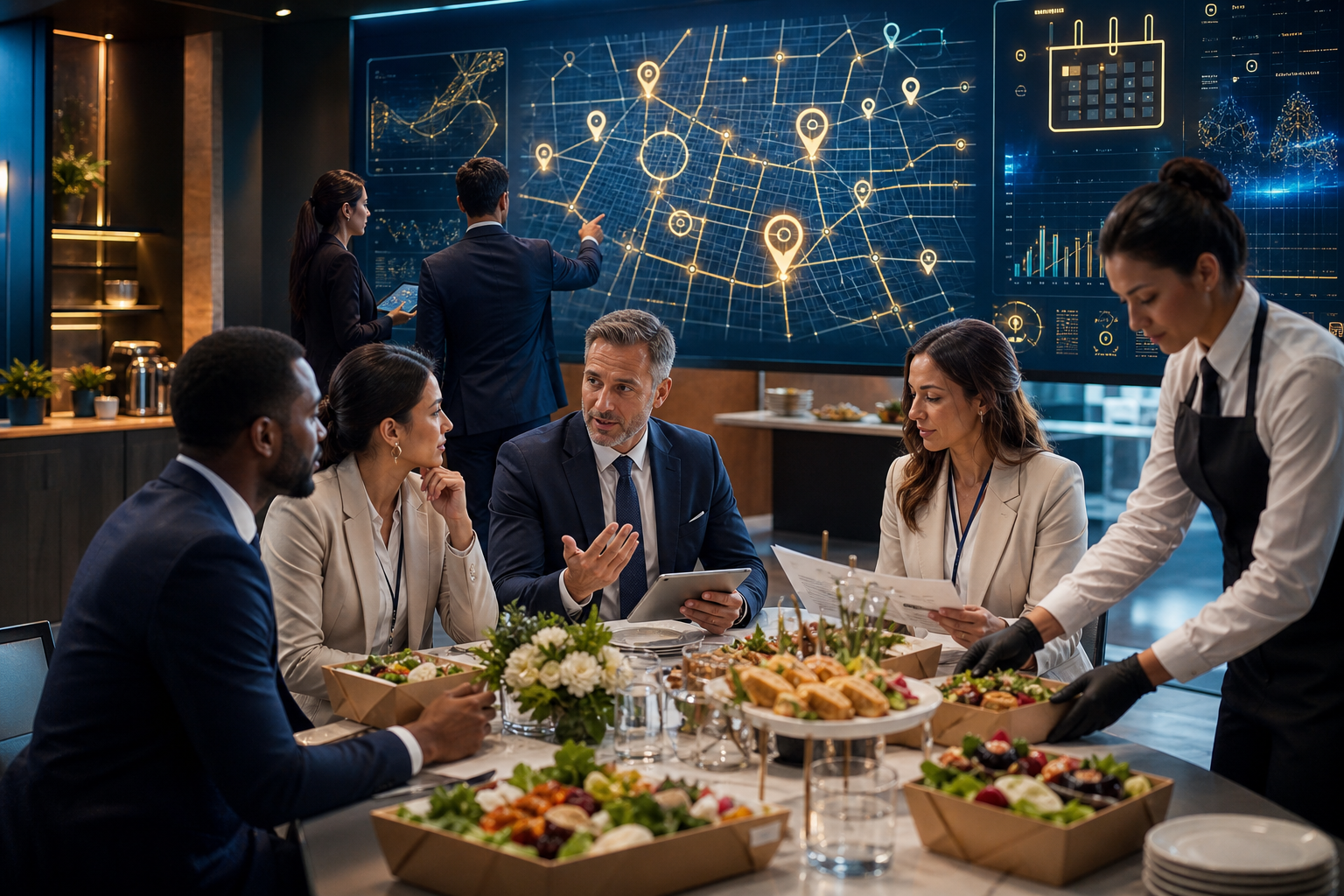
AI tools can help analyze customer inquiries, search trends, seasonal patterns, and audience preferences. These insights allow catering businesses to identify which services are in demand and which locations deserve greater marketing attention.
For example, if businesses in a particular district frequently search for office lunch catering, a provider can develop targeted packages and local content to address that demand.
2. Increasing Visibility in Local and AI-Powered Search
When event planners search online or ask AI assistants for catering recommendations, accurate business information and relevant content can help providers become easier to discover.
Commercial caterers can strengthen their online presence by maintaining an updated Google Business Profile, collecting authentic customer reviews, publishing professional event photographs, and clearly identifying the areas they serve.
Creating dedicated website pages for corporate catering, conference meals, weddings, and private events can also help potential customers find services that match their needs. Each page should provide useful details about menus, guest capacity, delivery options, and service locations.
The objective is simple: make it easy for both customers and search systems to understand what the business offers and why it may be a suitable choice.
3. Converting Discovery Into Qualified Leads
Online visibility creates opportunities, but effective lead management turns those opportunities into potential revenue.
AI-powered inquiry systems can help collect essential event details, including the date, location, guest count, budget, dietary requirements, and preferred catering style. This information enables sales teams to evaluate inquiries and prepare more relevant proposals.
When integrated with a customer relationship management (CRM) platform, these systems can organize leads, track conversations, and help teams prioritize promising opportunities.
Automated responses can also acknowledge inquiries quickly, while human staff handle complex requests, confirm availability, and finalize pricing.
4. Personalizing Marketing for Different Customers
Corporate clients and private event planners often have different priorities. Businesses may need reliable delivery, transparent pricing, and recurring meal programs, while wedding planners may focus on customized menus, presentation, and guest experience.
AI can help segment audiences and develop marketing messages that reflect these different requirements. It can also support location-specific content, social media campaigns, and personalized email drafts.
Rather than sending the same message to everyone, caterers can provide relevant information that speaks directly to each customer’s event needs.
5. Measuring Performance and Optimizing Growth
Leading catering businesses should measure the results of their AI-powered marketing efforts. Useful indicators include qualified inquiries, proposal requests, conversion rates, response times, repeat bookings, and customer acquisition costs.
These metrics help businesses determine which marketing channels generate genuine opportunities instead of merely increasing website traffic.
By reviewing performance regularly, caterers can refine their targeting, improve their online content, and invest in strategies that support sustainable growth.
Conclusion
AI is creating new ways for commercial caterers to identify local demand, improve online discovery, and connect with event planners. However, technology alone does not guarantee success.
The strongest approach combines accurate business information, useful local content, effective lead management, personalized communication, and dependable service. When these elements work together, caterers can improve their chances of being discovered, simplify the customer journey, and develop lasting business relationships.
In today’s competitive catering market, the real advantage is not simply adopting AI. It is using AI to help the right customers find the right catering solution at the right time.