How to Cater Large-Scale Dinners for 100+ Guests Without Costly Logistics Bottlenecks
Meta Description: Learn how commercial caterers can manage dinners for 100+ guests with smarter event planning, optimized food preparation, efficient staffing, delivery coordination, and AI-powered catering technology.
Introduction
Catering a dinner for more than 100 guests is a major operational challenge. From preparing hundreds of portions to coordinating deliveries, managing dietary requirements, and serving meals on schedule, even a small mistake can disrupt the entire event.
For commercial caterers, success depends on more than producing excellent food. It requires a well-coordinated system that connects kitchen operations, staffing, transportation, equipment, and event management. With careful planning and the right technology, catering teams can serve large groups efficiently while maintaining food quality and a positive guest experience.
1. Plan the Event Before the First Ingredient Is Prepared
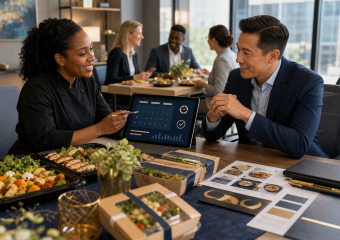
A successful large-scale dinner starts with a detailed event plan. Before confirming the menu, caterers should establish the guest count, venue layout, service style, event schedule, budget, and available facilities.
Create a production timeline that works backward from the scheduled serving time. Include ingredient purchasing, preparation, cooking, packing, transportation, setup, and service.
Confirm the final guest count and establish a clear deadline for changes. Assign one person to communicate updates between the client, kitchen team, delivery staff, and event coordinator.
Practical checklist:
- Confirm guest numbers, menu, and dietary requirements.
- Inspect venue access, kitchen facilities, and serving areas.
- Set preparation, dispatch, setup, and service deadlines.
- Assign clear responsibilities and communication channels.
2. Design a Menu for Volume and Consistency
Not every dish that works beautifully for a small dinner is suitable for 100 or more guests. Large-scale menus should balance quality, preparation time, transportation needs, and serving efficiency.
Choose dishes that can be produced consistently in batches and maintain their texture, flavor, and appearance during transport. Consider buffet-friendly options, carefully planned plated meals, and components that can be prepared ahead without compromising food safety.
Standardized recipes and portion sizes help control food costs and reduce shortages or excessive leftovers. Label dietary-specific meals clearly and establish procedures to prevent cross-contact with allergens.
Always follow applicable food safety requirements for cooking, transport, holding temperatures, and service.
3. Optimize Kitchen Production and Staffing
Kitchen bottlenecks often occur when several dishes require the same equipment, workspace, or staff members at the same time.
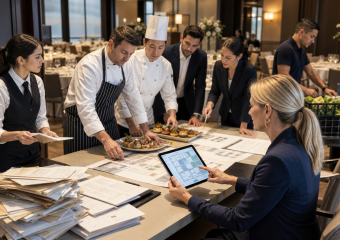
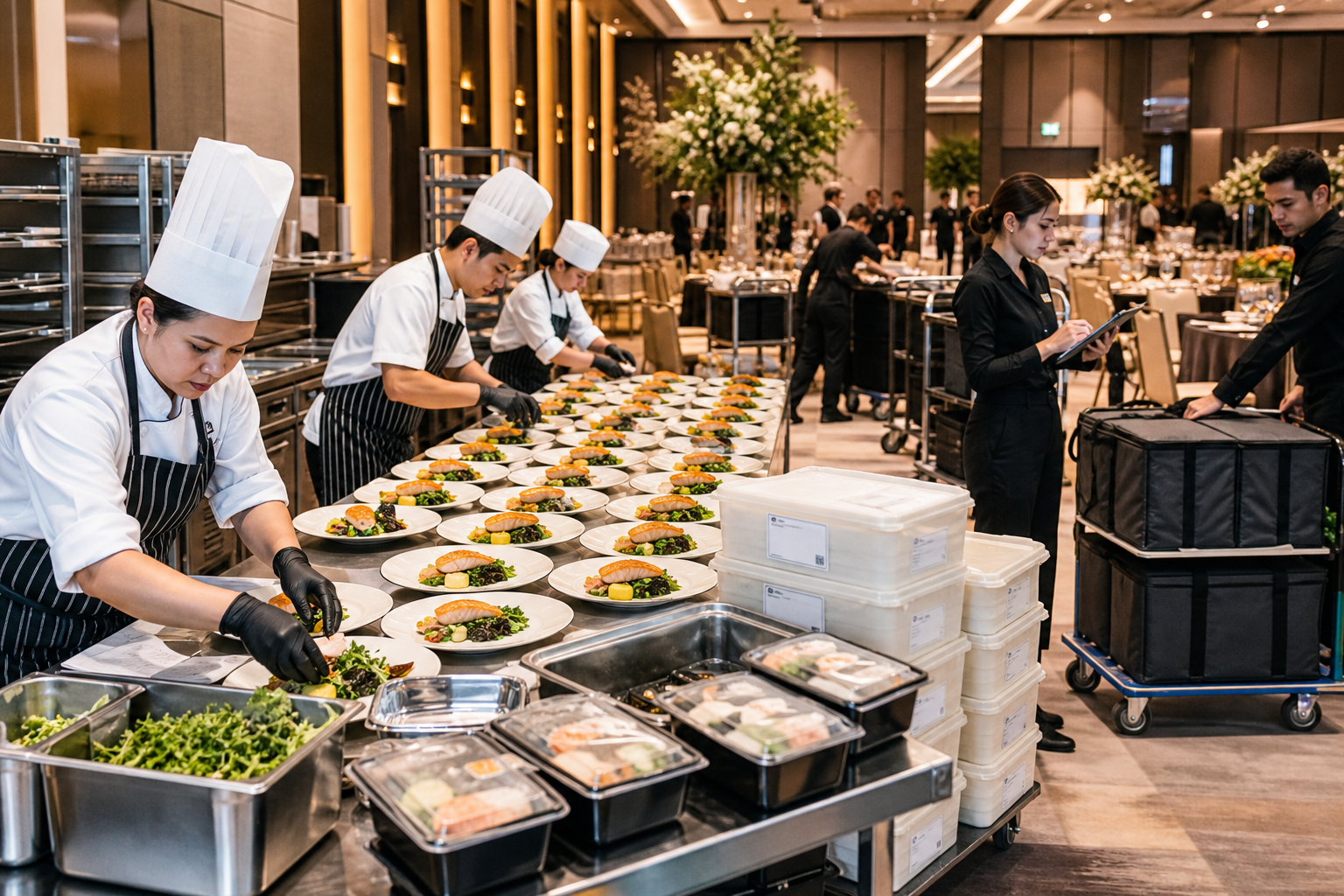
Divide production into stages, such as ingredient preparation, cooking, portioning, packing, and final presentation. Use a production sheet showing quantities, deadlines, equipment requirements, and assigned team members.
For example, a dinner for 120 guests may require 120 main-course portions, plus a carefully calculated contingency based on the confirmed guest count, service format, and client agreement.
Assign staff according to workload and experience. Designate team leaders for kitchen production, packing, transport, and on-site service so that problems can be identified and resolved quickly.
4. Coordinate Delivery, Equipment, and Venue Setup
A meal prepared on time can still arrive late if transportation and venue logistics are poorly planned.
Confirm delivery access, parking arrangements, loading restrictions, travel time, and the location of serving stations. Allow a realistic contingency for traffic, equipment delays, and venue access issues.
Use labeled, food-safe transport containers and organize orders by destination, course, or service station. Verify that the venue has sufficient tables, serving equipment, refrigeration or hot-holding facilities, and power where required.
A final dispatch checklist should confirm quantities, special meals, utensils, beverages, signage, and equipment before vehicles leave the kitchen.
5. Use AI and Digital Tools to Prevent Bottlenecks
Technology can improve coordination when multiple teams, suppliers, and deadlines must align.
AI-powered planning tools may help estimate demand from historical orders, identify recurring operational delays, and support purchasing or staffing forecasts. Digital kitchen display systems and shared production schedules can make order status and preparation priorities easier to track.
Customer relationship management (CRM) and catering management platforms can also centralize event details, client communications, guest counts, and order changes.
For example, if a client changes the guest count, an integrated workflow can help the team identify which ingredient quantities, staffing plans, packing lists, and delivery arrangements need updating.
However, automated recommendations should be reviewed by experienced staff, especially when they affect food safety, final quantities, staffing, or delivery commitments.
Conclusion
Catering a dinner for 100+ guests without logistics bottlenecks requires disciplined planning, a scalable menu, organized kitchen production, reliable transportation, and clear communication.
By standardizing workflows and using digital tools to coordinate people and information, commercial caterers can reduce avoidable delays, control costs, and deliver more consistent service.
The ultimate goal is not simply to serve a large number of guests. It is to ensure that every meal reaches the right person, at the right time, at the expected quality—without unnecessary pressure on the team behind the event.