
Real-Time Event Tracking: Modernizing Load-In and Dock Check-In for Large-Scale Events
Meta Description: Discover how real-time tracking can modernize event load-in and dock check-in, improve delivery coordination, reduce delays, and streamline large-scale event logistics.
Real-Time Event Tracking: Modernizing Load-In and Dock Check-In for Large-Scale Events
Large-scale events depend on precise logistics. Concerts, conferences, festivals, sporting events, and corporate gatherings can involve hundreds of deliveries arriving at different times, often through limited loading areas. Without effective coordination, crowded docks, long wait times, and missed delivery windows can quickly create operational problems.
Real-time tracking provides event teams with better visibility into vehicles, deliveries, schedules, and dock activity. By replacing manual processes with connected technology, organizers can create a more efficient and predictable load-in experience.
The Challenge of Traditional Load-In
Traditional event load-in often relies on spreadsheets, phone calls, radios, paper schedules, and manual check-ins. These methods can work for smaller events but become difficult to manage as delivery volume increases.
When multiple vendors arrive simultaneously, staff may struggle to determine which vehicle should enter, where it should go, and when it should be unloaded. A single delayed delivery can create congestion that affects the entire schedule.
Real-Time Visibility Changes the Process
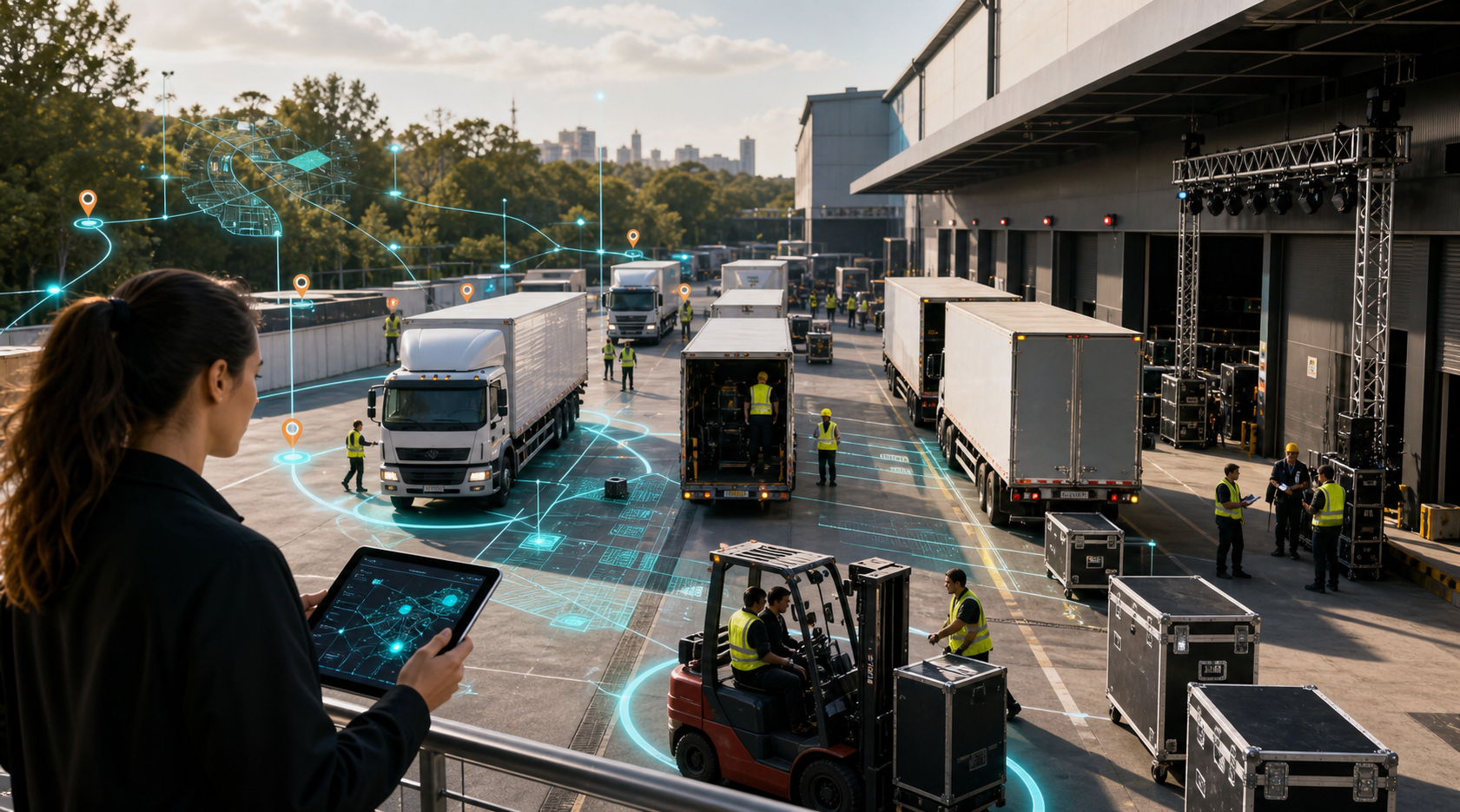
Real-time tracking allows event teams to see delivery activity as it happens.
Instead of waiting for a driver to call when they arrive, coordinators can have greater visibility into vehicle locations and delivery status. This makes it easier to identify approaching vehicles, anticipate delays, and prepare the appropriate loading area.
Better visibility also allows teams to make decisions based on current conditions rather than outdated schedules.
Streamline Dock Check-In
Dock check-in is one of the most important points in the event delivery process.
A digital check-in workflow can help staff quickly verify:
- Driver information
- Delivery details
- Scheduled arrival times
- Vendor information
- Assigned dock or loading area
- Delivery status
This reduces unnecessary paperwork and helps keep vehicles moving through the facility.
Reduce Dock Congestion
Limited dock space can become a major bottleneck during large events.
Real-time tracking can help teams coordinate arrival times and manage dock availability more effectively. Instead of having multiple vehicles waiting at once, organizers can better control when vehicles arrive and where they should go.
This creates a smoother flow of vehicles and gives staff more control over the load-in process.
Improve Communication With Vendors
Event logistics involve many different stakeholders, including vendors, drivers, production teams, venue staff, and event managers.
A connected tracking system provides everyone with clearer delivery information. Teams can identify when a vehicle is approaching, whether a delivery has been checked in, and whether an order has reached its destination.
This reduces the need for repeated phone calls and manual status updates.
Create Better Accountability
Real-time tracking also creates a clearer record of event logistics.
Teams can track when vehicles arrive, when they are checked in, and when deliveries are completed. This information can be useful for identifying bottlenecks, reviewing event performance, and improving future load-in schedules.
Over time, historical data can help organizers understand peak arrival periods and improve resource planning.
Modernizing Event Logistics
Large-scale events require coordination across many moving parts. When load-in and dock operations depend heavily on manual communication, even a small disruption can affect the entire schedule.
Real-time tracking provides the visibility needed to manage these challenges more effectively. By connecting delivery schedules, vehicle activity, dock assignments, and check-in processes, event teams can create a more organized logistics operation.
Conclusion
Modern event logistics require more than a detailed schedule. They require the ability to monitor what is happening in real time and respond when conditions change.
Real-time tracking can help event organizers reduce dock congestion, streamline check-in, improve communication, and maintain better control over large-scale deliveries.
For events where timing matters, real-time visibility turns load-in from a reactive process into a coordinated operation.