
Why Modern Offices Are Replacing Traditional Caterers with Intelligent Marketplaces
Meta Description: Discover why modern offices are turning to intelligent catering marketplaces to simplify vendor discovery, compare options, manage corporate meals, reduce administrative work, and improve workplace dining.
Corporate catering has changed significantly as workplaces become more flexible, distributed, and technology-driven. For many office managers and corporate event planners, finding the right catering provider still involves searching online, requesting menus, sending emails, comparing quotes, and coordinating delivery details manually.
Intelligent catering marketplaces are offering a different approach. Instead of relying on a single traditional caterer or managing multiple vendors independently, businesses can use digital platforms to discover and coordinate catering options through one connected experience.
The Problem With Traditional Catering
Traditional catering relationships can work well for recurring orders, but they may not always provide enough flexibility for modern businesses.
An office might need breakfast for a small team one day, an executive lunch the next, and catering for a large corporate event later in the month. Using the same provider for every situation may limit menu choices, pricing flexibility, or service options.
Manual vendor discovery can also consume significant administrative time.
Intelligent Marketplaces Expand Choice
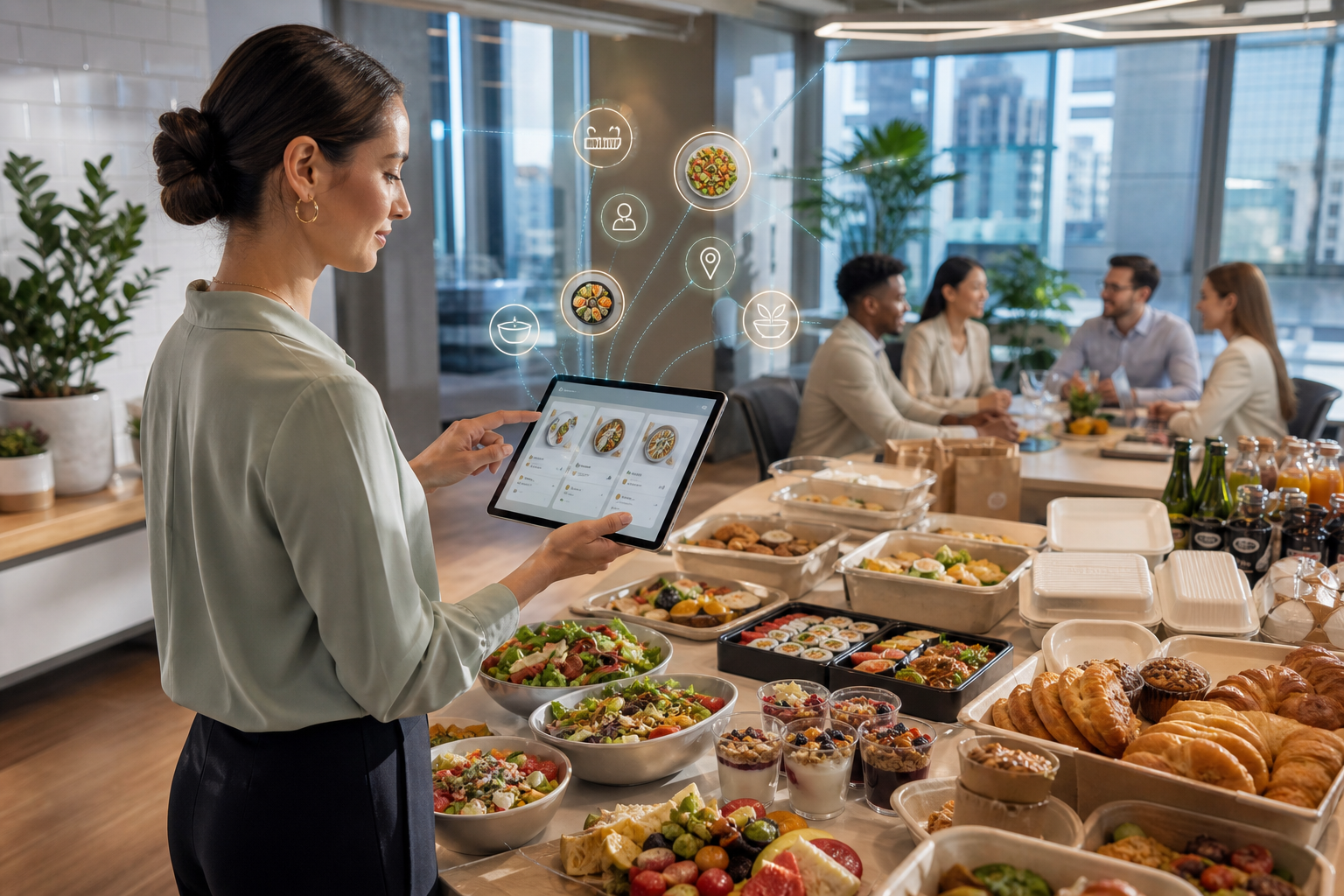
An intelligent marketplace can connect businesses with multiple catering providers, allowing organizers to discover options based on their specific requirements.
Instead of starting with a caterer’s available menu and trying to make the event fit it, businesses can begin with their needs—such as guest count, location, budget, cuisine, dietary requirements, and event type—and explore providers that may be a better match.
Better Vendor Discovery
Finding a suitable caterer is often one of the most time-consuming parts of event planning. Businesses may spend hours researching providers that ultimately cannot accommodate their schedule, location, or requirements.
A digital marketplace can streamline this discovery process by organizing relevant vendor information in one place. This gives event planners a more efficient starting point when searching for catering services.
Compare Value More Easily
Price is important, but it is only one part of a successful catering decision. Businesses also need to consider menu quality, reliability, delivery capabilities, flexibility, dietary accommodations, and overall service.
A marketplace approach can make it easier to evaluate different providers according to the needs of a specific event rather than selecting a vendor based solely on familiarity.
Reduce Administrative Work
Corporate catering often involves repetitive communication. Planners may have to explain the event details to several vendors, follow up for quotes, confirm guest numbers, and communicate last-minute changes.
Intelligent digital workflows can reduce some of this repetitive work by keeping event information organized and making communication more structured.
This is particularly valuable for companies that coordinate frequent meetings, employee lunches, conferences, and client events.
Give Businesses Greater Flexibility
Modern workplaces need catering that can adapt. Hybrid teams, changing office schedules, different employee preferences, and varying event sizes require more flexible solutions.
An intelligent marketplace can give businesses access to a broader range of providers and service models, helping them select the option that best fits each individual occasion.
A More Connected Catering Ecosystem
The biggest difference between traditional catering and an intelligent marketplace is connectivity.
Instead of businesses, caterers, vendors, and customers operating through separate conversations, a digital marketplace can bring participants into a more connected ecosystem. This can make catering discovery and coordination more efficient while creating new opportunities for food businesses to reach corporate customers.
Conclusion
Modern offices are not necessarily abandoning traditional caterers because traditional catering has no value. They are looking for more choice, flexibility, transparency, and efficiency.
Intelligent catering marketplaces can help businesses discover suitable providers, compare options, reduce administrative work, and manage changing workplace dining needs. For companies seeking a more efficient approach to corporate food services, the marketplace model represents a significant shift from simply choosing a caterer to intelligently connecting the right business with the right catering solution.