
Scaling Workplace Dining: How Multi-Location Companies Manage Large-Scale Food Delivery
Meta Description: Learn how multi-location companies streamline large-scale workplace food delivery with centralized planning, digital ordering, vendor coordination, real-time visibility, and scalable dining operations.
As companies expand across multiple offices, managing workplace dining becomes increasingly complex. What may be straightforward for one office can become a major operational challenge when dozens of locations, hundreds of employees, multiple vendors, and different delivery schedules are involved.
Large-scale workplace food delivery requires more than simply placing larger orders. Companies need systems that can coordinate locations, vendors, employees, menus, dietary requirements, budgets, and delivery schedules while maintaining a consistent experience.
Centralize the Dining Strategy
Multi-location companies often struggle when every office manages food independently. Different teams may use different vendors, ordering methods, and approval processes.
A centralized dining strategy can create greater consistency while still allowing individual offices to accommodate local preferences. Companies can establish common standards for budgets, quality, delivery requirements, and vendor performance.
Manage Multiple Vendors Efficiently
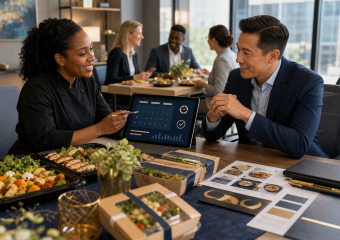
A growing organization may work with different caterers across cities and regions. Managing these relationships manually can create unnecessary administrative work.
Digital platforms can help organize vendor information, menus, service capabilities, and communication in a more accessible environment. This allows workplace teams to identify suitable providers without restarting the entire search process for every event or meal.
Coordinate Large Delivery Windows
Timing becomes particularly important when food must be delivered to multiple offices. A delay at one location can disrupt employee schedules, meetings, or events.
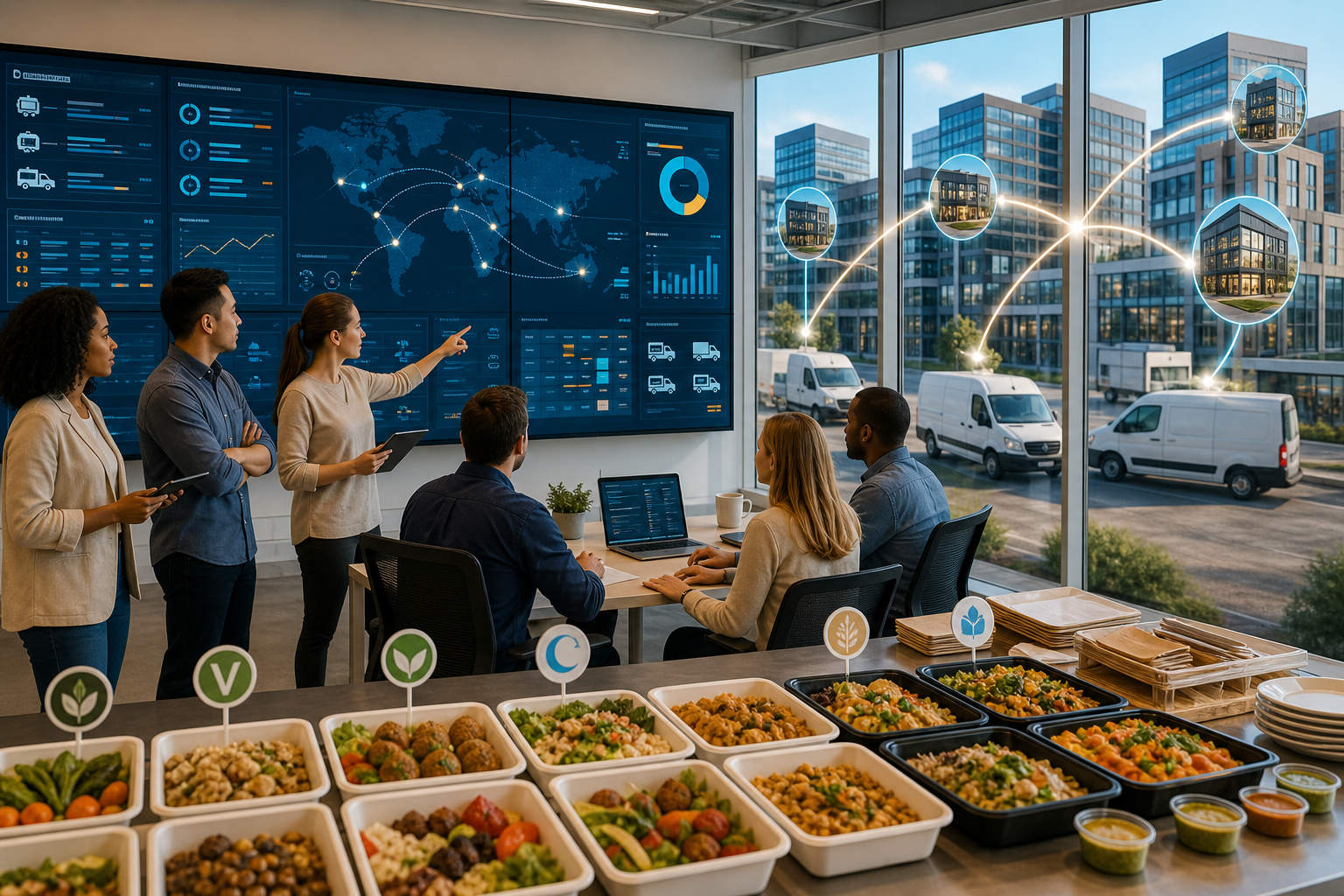
Clear delivery windows and centralized tracking can help teams monitor orders and identify potential problems earlier. Real-time information can also make it easier for coordinators to communicate changes to vendors and internal teams.
Accommodate Different Employee Needs
Employees across different locations may have very different dietary preferences. Vegetarian, vegan, halal, gluten-free, allergy-sensitive, and other requirements need to be considered when planning large-scale workplace dining.
Digital ordering and preference management can make it easier to collect and organize these requirements. Clear labeling and structured meal information can also help reduce confusion when food arrives.
Keep Budgets Under Control
Scaling food delivery can quickly increase expenses. Companies need visibility into spending across individual offices as well as the organization as a whole.
Centralized reporting can help decision-makers understand where dining budgets are being used, compare costs between locations, and identify opportunities for greater efficiency. The goal is not necessarily to spend less everywhere, but to ensure that spending produces meaningful value.
Standardize Without Losing Flexibility
A successful multi-location dining program needs both consistency and flexibility. Companies can establish standardized processes for ordering, approvals, vendor management, and reporting while allowing individual offices to choose menus and providers that fit their local needs.
This balance helps large organizations maintain operational control without creating an overly rigid employee dining experience.
Use Technology to Connect the Entire Process
Modern workplace dining involves multiple participants: employees, office managers, event planners, caterers, vendors, delivery teams, and finance departments.
A connected digital workflow can bring these participants together and reduce the need for disconnected spreadsheets, emails, and manual updates. Platforms designed for catering discovery and coordination can help companies manage food delivery as an organized business process rather than a series of individual orders.
Conclusion
Scaling workplace dining across multiple locations requires more than adding vendors or increasing order quantities. Companies need centralized planning, reliable communication, budget visibility, flexible vendor management, and efficient delivery coordination.
With the right digital tools and standardized processes, multi-location organizations can simplify large-scale food delivery while maintaining quality and employee satisfaction. As workplace dining programs continue to grow, connected technology can provide the visibility and coordination needed to manage them efficiently—from the first catering request to the final delivery.